
 Login

From City Girl to Country Girl: My Culture Shock as an Au Pair in Rural France
by Asha Lee on Sep 11, 2026

1. Introduction
My name is Asha. I am 25 years old, and I am from Hong Kong. Currently, I am studying for my master’s degree in Intercultural Management in France, and I am also doing my internship at AuPair.com.
Inspired by my previous Au Pair experience in France, I am conducting research for my thesis on the topic “Navigating Power Relations in Au Pair Migration: Gender, Race, and Social Mobility Among Asian Female Au Pairs in France.” My research aims to conduct an independent study on the experiences of Asian female Au Pairs in France. The study will explore their migration journeys, everyday experiences, relationships with their Host Families, and future aspirations.
Being born and raised in a big modern city like Hong Kong, I experienced significant culture shock when I moved to a suburban area of France and lived with my Host Family. In this blog, I will share my experience of how I adapted to the cultural differences, how they have changed me, and also give some useful advice to future Au Pairs like you.
2. Background
Ambitious to improve my French, I came across the Au Pair program in France and took a big leap of faith to participate in this program. Nothing is more efficient for improving a language than fully immersing yourself in an environment where the language is spoken. Enjoying free accommodation and full board with a Host Family was also one of the biggest incentives for me to participate in the program as a fresh graduate back then.
I started my Au Pair journey in Beauvais, France, in November 2024, where I stayed for seven weeks with a single-parent family in the countryside. My Host Family consisted of the Host Father and his 17-year-old son. They lived in a big house surrounded by farms and forests, and they also owned two fields and raised three horses and one donkey.
3. Culture Shocks
A House Built by The Host Father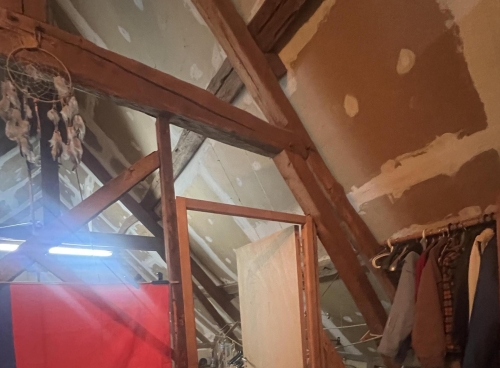
Surrounded by nature, the house was massive and had been entirely built from scratch by the Host Father. When I entered the house, it was full of old items, and the structure of the house surprised me. The house was built primarily with wooden planks, and some parts of the house seemed to be unfinished.
Coming from Hong Kong, the environment I experienced in France was completely different from what I was used to back home. In Hong Kong, most people live in tall residential buildings, usually in relatively small flats, as the population density is extremely high. Everything is generally well-developed and well-furnished, and it is very rare to see people building their own houses from scratch.
Another major difference is the convenience of the neighbourhood. In Hong Kong, it is common to have supermarkets, restaurants, convenience stores, and other shops just downstairs or within a few minutes' walk from your home. However, where my Host Family lived, the surroundings were completely different. The house was surrounded by only a few other houses, forests, and animals. There were no shops or restaurants nearby, and even getting to the nearest town required travelling by car. For someone who grew up in such a busy and modern city as Hong Kong, living in this kind of environment was definitely a huge cultural shock.
Heating the House the Old-Fashioned Way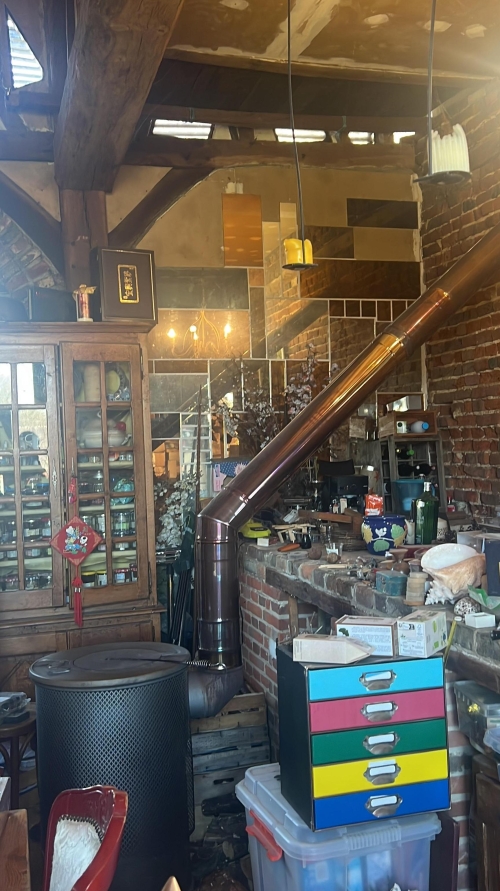
Having to experience winter in the countryside of France was definitely an unforgettable experience. Growing up in Hong Kong, I had never experienced snow, and the modern design of Hong Kong apartments is well-structured enough to keep us warm during the winter. However, the situation was totally the opposite where my Host Family lived.
Since the temperature in the countryside is already much lower than in a big city during winter, the house was extremely cold, especially at night. However, instead of having a modern heating system built into the household, the Host Father insisted on using the traditional way of warming the house, which was burning wood in a fireplace.
Every few days, the Host Father and I needed to go into the woods to cut and collect dry wood for burning. During the day, small pieces of wood were burned to keep the house warm, and the fireplace needed to be refilled every few hours. During the night, the Host Father needed to put big logs inside the fireplace to keep the house warm throughout the long night. However, the fire did not last very long, and the house would usually become very cold in the morning before the Host Father refilled the fireplace with more wood.
Repair, Reuse, Recycle
My Host Family lived by a strong zero-waste principle, and this was one of the biggest shocks I experienced during my time in rural France. In the household, we were encouraged not to waste any part of our food and to finish everything on our plates. Even what I would normally consider waste had a purpose. Food scraps such as bones, onion skins, and eggshells could be put into the fireplace as fuel, while animal-friendly leftovers, such as carrot skin, were collected to feed the horses. Nothing was simply thrown away without first considering whether it could be used for something else.
The same mindset applied to household items. Instead of automatically buying new equipment when something broke, my Host Father would sometimes visit garbage collection areas to look for things that could be repaired and reused. I remember being surprised to see him bring home items such as bed frames, vacuum cleaners, and even a washing machine. Rather than throwing them away, he would repair them himself and give them a second life in our home. What I initially saw as discarded objects, he saw as things that still had value.
This was very different from what I was used to in Hong Kong, a highly consumer-driven city where convenience and efficiency are deeply embedded in everyday life. When household appliances become old or stop working, replacing them with a new model can often seem like the easiest option. There is also a strong desire for new products, newer models and the latest technology.
Food waste is another issue that made me reflect on my own habits. In a busy city like Hong Kong, eating out and ordering food are part of everyday life, and it is not uncommon for people to order more than they can finish. Although recycling systems do exist in Hong Kong, I feel that the emphasis on convenience and efficiency can sometimes make it difficult for people to develop consistent recycling habits.
4. How My Au Pair Experience Changed Me
Living far away from home, in a remote place and with people I had never met before, pushed me out of my comfort zone. I had to build a life in a completely unfamiliar environment and learn how to manage things on my own. Everything was different from what I was used to in Hong Kong, from the daily routines to the way my Host Family lived. I had to learn to adapt to another person's lifestyle instead of expecting them to adapt to mine.
My Host Father also taught me many practical and useful skills that I had never learned before. I learned how to change a car tyre, identify dry and flammable wood in nature, repair different household items, and safely use tools such as an electric saw and screwdriver. These might seem like small things, but for someone from a highly urban environment like Hong Kong, they were completely new experiences. I became more confident in solving practical problems and learned that sometimes you can fix something yourself instead of immediately asking for help or buying a replacement.
But perhaps the most exciting new skill I unlocked during my stay was horse riding! Growing up in Hong Kong, I never imagined that I would have the opportunity to ride a horse through the forest, let alone experience galloping through nature. It was one of the experiences I appreciated the most during my stay. Being on horseback, surrounded by the forest and countryside, felt completely different from anything I had experienced before. It was both exciting and a little scary at first, but eventually, it became one of my favourite memories from my Au Pair experience.
At the same time, living with my Host Family made me much more aware of what I consume and how I deal with waste. Seeing how they reused, repaired, and recycled almost everything encouraged me to think twice before throwing something away. I became more conscious of my consumption habits and started developing my own recycling and zero-waste habits.
5. Reminders for Future Au Pairs
Looking back on my own experience, there are a few things I would strongly recommend to anyone planning to become an Au Pair:
Discuss the Important Details Before You Arrive
Don't assume that you and your Host Family have the same expectations. Before signing the contract, discuss important details such as working hours, daily schedule, pocket money, start and end dates, days off, and responsibilities. Make sure everything you agree on is clearly written in the contract.
Have Several Video Calls Before Choosing a Host Family
I would strongly recommend having at least three video calls with your potential Host Family before making your final decision. A video call gives you a much better idea of the family's personality, communication style, and daily life than messages alone. If possible, ask the family to show you your future room and the rest of the house during a video call. This can help you understand what your living environment will actually be like and make sure it matches your expectations.
Don't Be Afraid to Ask Questions
Ask as many questions as you need, even if they seem small or obvious! It is much better to clarify something before arriving than to discover later that you and your Host Family had completely different expectations or habits. You can ask about anything that matters to you — from family routines and food preferences to pets, transportation, privacy, household rules, and what is expected from you.
Stay Connected With People You Trust
Even when everything seems to be going well, keep in regular contact with your family, friends or another trusted person. Let them know where you are and how you are doing. Most importantly, don't hesitate to ask for help if something feels wrong or alarming. Being independent doesn't mean that you have to deal with everything alone.
Learning Mandarin Tips for Au Pairs in China
by Nina Nguyen on 19 Aug, 2026
Read More »
Study German as an Au Pair
by Nina Nguyen on 22 Sep, 2026
Read More »
Categories:
Popular posts:
Join us
Are you looking forward to starting the Au Pair program? AuPair.com will help you find your future Au Pair / Host Family.
Register as an Au Pair
Register as a Family
Register with us and get to know what we can do for you: